
Seats below the Noon Stair
The same approach with a different order
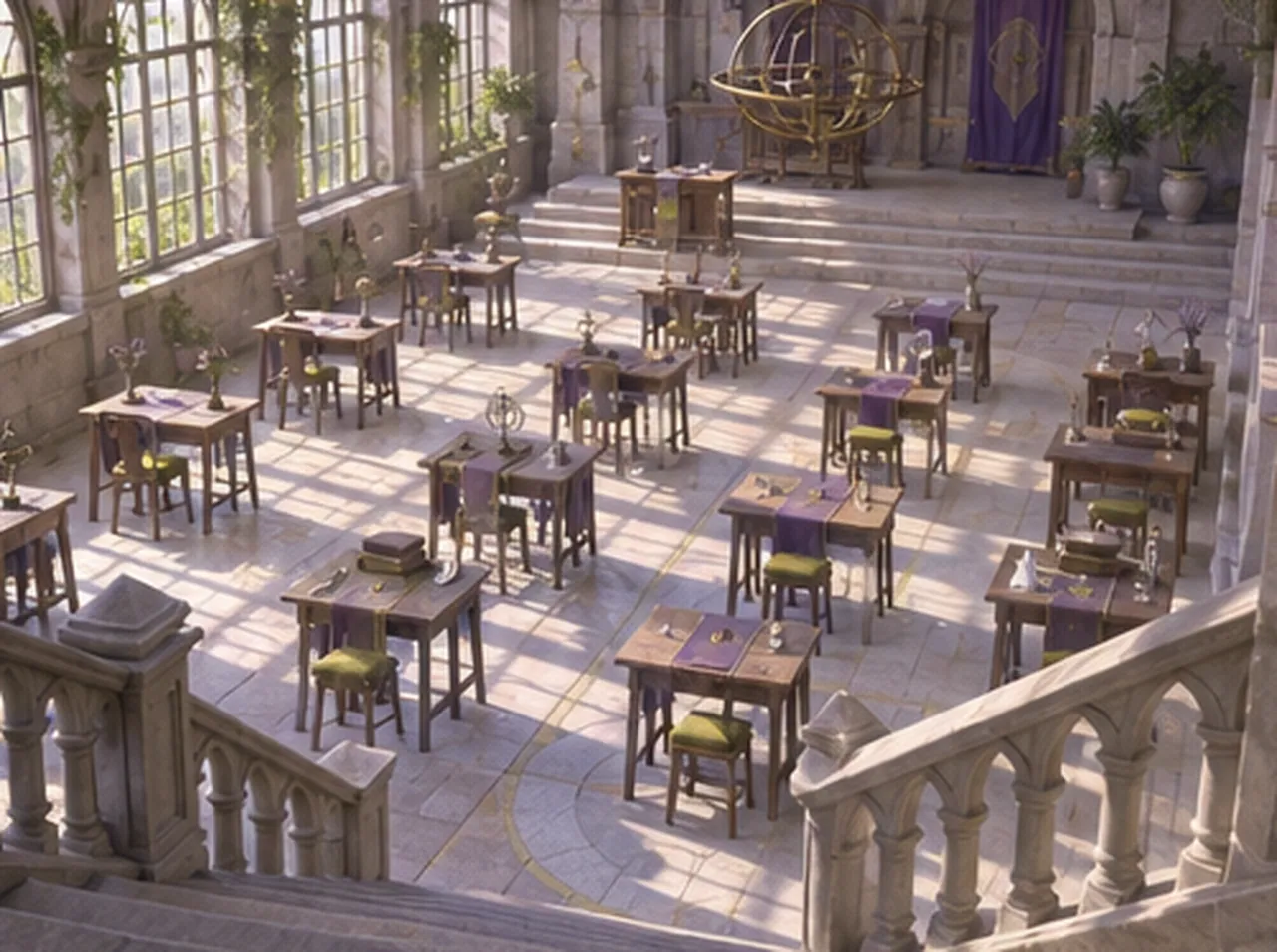
The places under the academy’s stair receive light near the end of the morning. A student arriving for practice can see a row of desks through the wide gap between the first two posts. The initial sequence in After the Practice Bell kept the rooms in the same order on both visits. We want a return visit to ask what the student can now infer from the layout. One possible scene swaps a shared practice exercise into the normally quiet room. An apprentice recognizes the space but must find a spot for today’s tray.
The first lesson uses a low number of people. The student can choose a desk and get a clear view of most rests. The replacement activity has people sharing a bench at the far side, and it needs enough room to hand over a single tool. The nearest seat gives the best view of the bell but lies behind someone from another group. The quieter seat allows the handover and gives a nearer look at a mark left on a slate after the previous lesson. That opening only becomes useful when the student has enough information to compare the seats.
Establish a view before announcing a change
Start one trial beside the foot of the stair. There is a stair post on the left and a wide slate spread over two tables ahead. These pieces of the picture line up through both schedules. We introduce a notice about shared practice early enough for the player to read it before descending. It names the activity that now uses the south wing and indicates where the students who arrive first usually gather. The arrangement remains open to a person who chooses a later seat. Make one person move a tray so the apprentice sees the earlier observation being tested by the room.
The practice hall needs an easy way to show that a place has become occupied at a different time. One idea adds a closed tray on the seat. Another places a student in an early gesture that demonstrates where they expect others to go. The shutter just before the stair can light up a short lane when it becomes clear. Each choice would give a different kind of information: a physical obstacle, a particular intention or a route that opened. The earliest test should introduce one change at a time.
A seat is useful for a reason
Once a lesson begins the player can choose how to use their earlier planning. The closest seat to the bell waits longer for a shared handover. Someone farther away might finish the task earlier and have time left to study a chalk mark. Giving these two runs the same prompt lets someone compare the difference. We can ask what the player recognized by the time the bell sounded, which item they brought and what they might do on the next trip.
Loops on the Practice Tools supplies one prop that can help when a familiar task moves into the new schedule. Students can find their chosen tool by its loop even when the bench next to it is occupied. If that marking works, the timing question is about the seat instead of an object the apprentice lost from view. A Gesture from the Next Desk explores a quieter signal for approaching a seat across the row. Both ideas let the act of walking through the room have a visible purpose.
Show exactly where the change ends
The stair and broad desk stay still in our drawings while neighbors change position. We can mark the first useful time to look and then test the difference between an occupied seat and an unavailable route. When a student decides to return to the first place they practiced, a clear view of the new tray arrangement should tell them whether it still suits their plan. That outcome would be more useful than a notice stating that the timetable moved. It would show that someone can navigate a known place under a changed order.