
The Chalk Mark on a Retry
A familiar problem with a long entrance
The early layout for The Spell in the Wrong Seat has a mistake that appears in plain view. After a student misdirects a practice light, the activity originally began from a wide shot where the light had not yet passed the near desk. Going back to that point made it easy to reset the timing, but also took the player away from the place they had just learned to watch. There was an empty slate on the far side. The people working through the scene were looking for it before they could get back to the part of the exercise that interested them.
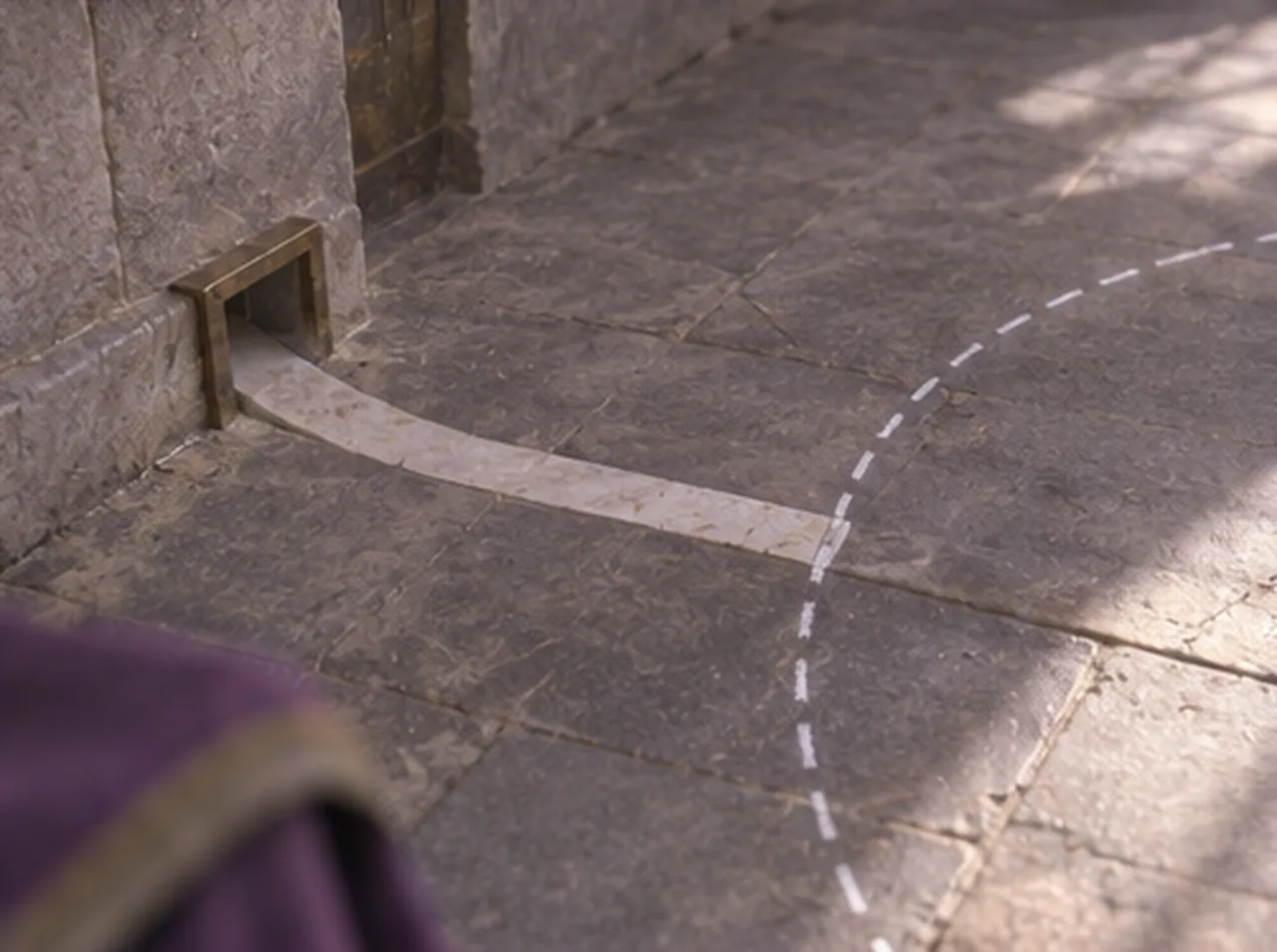
We can let a retry come from a chalk mark at the first important pause instead. The basic room stays in the same state until the apprentice acts. The line drawn on the slate before the first attempt starts remains in two small areas. The line the spell drew in the previous attempt is available as a separate faded trace near one corner. There is open space between those two pieces. The apprentice can use the original mark to find their position and decide how much of the earlier try to recall.
What to leave drawn on the slate
We need the originating mark to keep its height and angle when the apprentice takes the second look from a different side. We first tried a large shape that continued out of view. It drew attention rapidly, but its edges looked too much like a part of the room. A small fork has a known position close to the rest for a tool. An apprentice can begin by finding the rest and learn what the mark meant through its relation to the light. A line farther along the slate shows where the last pass went.
A useful exercise compares two approaches on a fresh slate. In the first, a teacher tells the student to restart at the beginning. In the other, the mark appears just before feedback from the attempt fades. Explain that both routes lead to the same decision about placing a tool. Then ask where the apprentice would look to compare the two attempts. We can check whether keeping the mark gives the student time to work on the timing instead of reconstructing the classroom.
Avoid an entrance that changes the lesson
Starting partway through needs a clear rule about what belongs to the saved scene. If a neighboring pupil moved toward a tray after the apprentice’s choice, the pupil goes back to their earlier place before the retry. Another student’s work visible at the side should remain quiet and keep its earlier shape. A saved position drawn on a slate is useful only when the familiar supporting objects have not changed their meaning. The design can show a brief fade between the two states while preserving the position of the previous line.
Read the second attempt as its own choice
The apprentice can act earlier and use a different rest. Coming back to an earlier position can also be the right decision when they want to see the light’s full movement from its first appearance. Give each starting point its own name, and keep a room feature or an illustration visible next to it. The activity should make clear what has already happened when the attempt starts. There should be little mystery about which light in the room still belongs to this exercise.
After the Practice Bell tests a different transition: some time passes and the apprentice can choose what to bring. The chalk mark here already belongs to the scene and serves as a visual point for comparison. It helps when an apprentice knows which decision they are coming back to. The next prototype trial can measure how often players point to the mark before the light moves instead of checking the entire room again.