
The Spell in the Wrong Seat
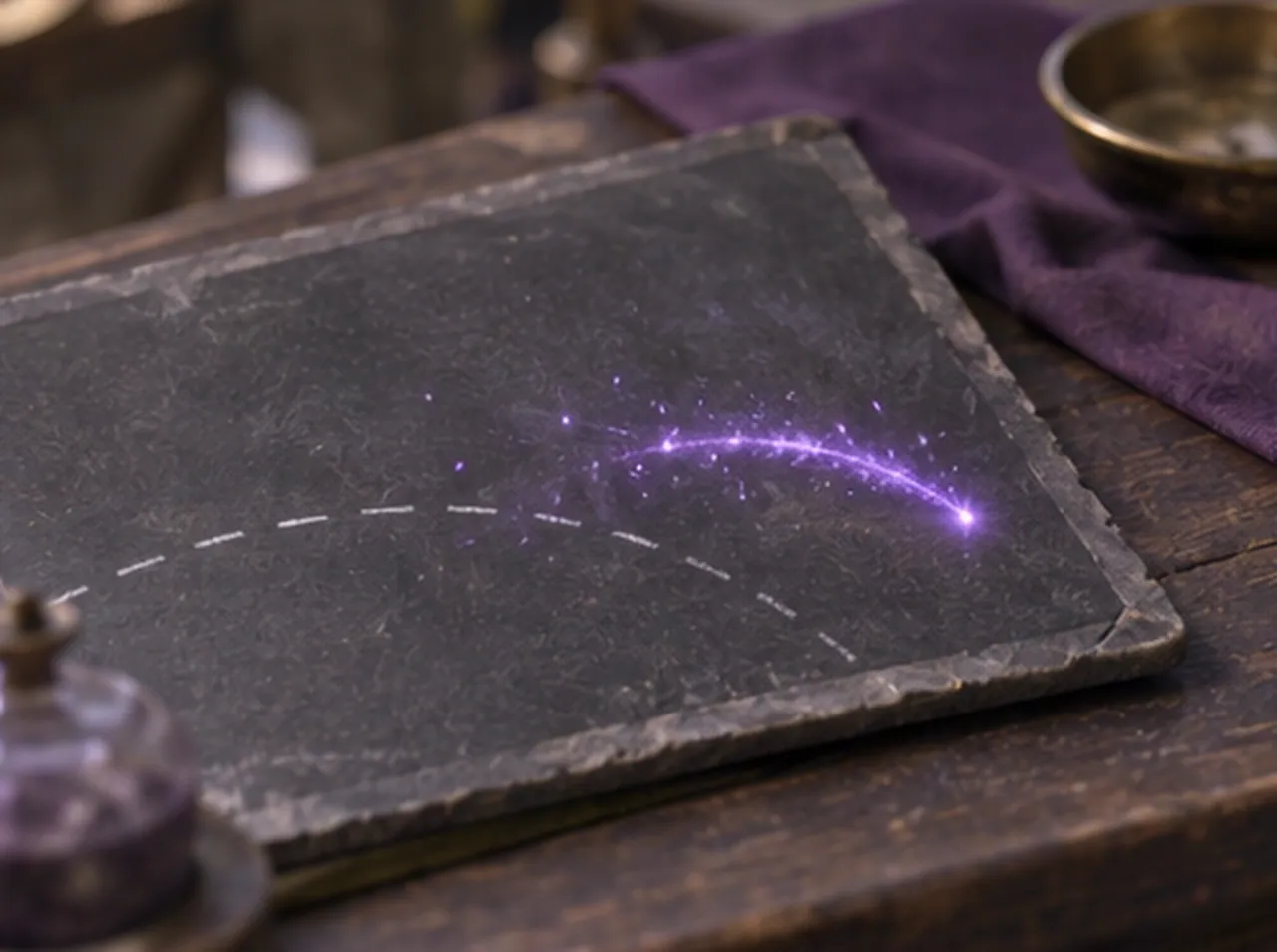
An open slate beyond two filled desks
A league of apprentice spell makers in an invented school practices lighting marks on stone slates. This scene starts after a practice light skips the learner’s usual place and lands near someone else’s chair. The player sees a bright tail moving toward a neighbor who is looking down. Along the next row there is an empty slate that looks like the intended destination. The light is still moving when the player is given control. They need to choose a useful place from which to observe the next change.
The practice tools have an open end that can turn toward someone or something. Setting a tool down causes the next light to bend around its usual rest. Moving that tool while the light passes has a delayed effect. The tool’s rest stays visible in a contrasting strip of slate, and the tail itself leaves a clear line briefly. Learning that delay makes a later choice more predictable. The first scene makes room for a correction that the player can try without losing the whole exercise.
Read, place and follow
Choose a place for the tool, look along the available line, then wait until the next change is visible. When a light approaches the end of a row, another pupil’s slate may hide its leading edge. You can watch its reflection, step to the spare seat or read the broad tail to guess what will occur next. The student can put the tool back in its rest at any time. If the light is close enough, the original change will still take place. The scene then lets you look back at the route it followed.
A late choice can help when a problem moves unexpectedly. It also makes the cue for the next turn harder to identify in a busy room. An early change makes the line clearer but can leave the light passing close to a student’s hands. The choice depends on who is using the room and where the light was already going. A Gesture from the Next Desk looks at how a teacher might signal a place to observe without choosing it for you.
The tail needs its own color
The picture gives the tool rests a dull ochre edge. An active light leaves a violet trace with a short split. Occupied desks have a broad wooden tray so a person can read them from a distance even when each apprentice is drawn differently. Art should preserve those cues when the room is viewed from the student side and from the empty slate. A sideways head should still feel like part of a person watching something, with a desk edge beside it that supplies an independent direction.
A focused early prototype
The current concept explores this classroom as a simple sequence of moves. The first prototype goal is to make the delayed turn legible in a view where the far end of the line is hidden. It tests whether a person sees where the light continued after a late change and can find another seat from which to try again. The Chalk Mark on a Retry follows one visual reference back into that next attempt. A useful second pass would give a player a different angle while preserving some part of the lesson they already understand. The exercise belongs to a fantasy setting and describes an imaginary spell.